
You wake up foggy. You take your coffee and hope it’ll kick in. By mid-morning, you’re still slow — but now you’re also wired, slightly anxious, and no clearer. Mid-afternoon rolls around and your mood is flat. Come evening, you’re wiped out and still haven’t done the work you meant to.
If this pattern feels familiar — brain fog AND mood issues AND sensitivity to the usual “solutions” — you’re not alone. In fact, it’s one of the most common clusters we see at Herb-Science.
The modern wellness world has a lot to say about “focus” and “mood.” Most of it involves mega-dose synthetic nootropics, caffeine stacks, high-dose adaptogens, and prescription options. For a lot of people, those work fine. For sensitive bodies — the ones who react badly to standard supplements, who can’t do caffeine without feeling awful, who stopped trusting nootropics after too many bad reactions — none of it does.
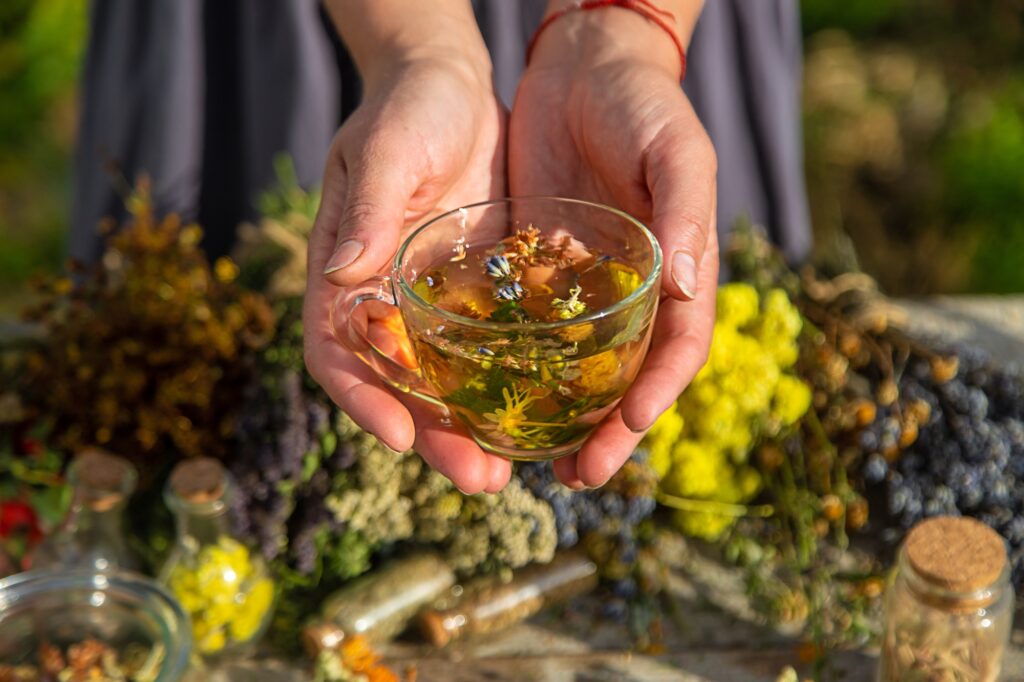
There’s a quieter tradition worth knowing about. Herbs that humans have used for centuries to support clear thinking and steadier mood. Not as stimulants. Not as replacements for medication. As gentle, body-supporting tools that work with a sensitive nervous system instead of against it.
Here are the five that matter most — and how to know if they’re right for you.
Why Brain Fog and Mood Issues Travel Together
First, let’s name something: brain fog and mood issues aren’t separate problems. They’re two symptoms of the same underlying pattern.
Your brain runs on a few core inputs: circulation (how much oxygen and nutrients your brain cells are getting), neurotransmitter balance (serotonin, dopamine, GABA), nervous system regulation (how calm or activated your system is), and cellular energy (how well your brain cells are producing ATP).
When any of these inputs drop — because of chronic stress, hormonal shifts, poor sleep, nutrient depletion, or aging — you tend to get BOTH foggy thinking AND emotional flatness at the same time. Your brain is under-resourced. It’s not just that you can’t think clearly; your mood can’t regulate properly either.
Also, hormonal shifts hit this system especially hard. Falling estrogen in perimenopause reduces both cognitive clarity AND emotional stability. So many women in their 40s and 50s describe exactly this pattern: “I’m forgetting things AND feeling flat at the same time, and it came on with everything else.”
The good news? Supporting one input often helps all of them. If you can improve brain circulation, mood tends to lift. If you can steady mood, cognition tends to clear. The system is interconnected.
Why Standard Brain Supplements Don’t Work for Sensitive Bodies
Most “brain health” and “mood” supplements on the market target one type of user: someone with a resilient nervous system who can absorb high doses of stimulants without flinching. Caffeine, L-theanine stacks, mega-dose B-vitamins, high-dose rhodiola, synthetic nootropics — these products assume you’ll tolerate a lot of stimulation.
For sensitive bodies, that assumption is the entire problem. Specifically:
Caffeine keeps your sympathetic nervous system activated for hours. If your system is already on edge, caffeine doesn’t produce clarity — it produces jitters, anxiety, and a crash.
Mega-dose synthetic nootropics push your neurotransmitter pathways hard. For slow-COMT people (roughly 1 in 3 adults), the flood of dopamine and norepinephrine can’t be cleared fast enough. The result feels like agitation, not focus.
High-dose adaptogens like rhodiola or Panax ginseng can be too stimulating for sensitive people. Instead of steady energy, you get wired-and-tired.
Prescription stimulants or antidepressants work for some, but they’re not always the right fit — especially when a dysregulated nervous system is the real driver, not a clinical diagnosis.
Herbs — specifically, traditional herbs used for centuries in Western, Ayurvedic, and Chinese medicine — are different. They work SLOWLY. They work WITH your biology, not over the top of it. And at gentle doses, they’re generally well-tolerated even by sensitive systems.
Let’s look at the five that matter most for brain fog and mood.
1. Gotu Kola — The Ayurvedic Herb for Clear Thinking
Gotu kola has been used in Ayurvedic and traditional Chinese medicine for over 2,000 years. Historically, it was known as “the herb of enlightenment” and used for everything from wound healing to memory support to meditation practices.
Modern interest in gotu kola focuses on its effect on circulation, nervous system support, and cognitive function. Herbalists credit it with supporting healthy blood flow to the brain and gentle regeneration of nervous tissue — which makes it particularly relevant for people experiencing brain fog, mild cognitive slowdown, or recovery from stress.
Who gotu kola helps:
- People with chronic brain fog
- Those recovering from burnout
- Anyone wanting gentle cognitive support without stimulation
- Older adults experiencing age-related cognitive changes
Unlike caffeine or synthetic nootropics, gotu kola doesn’t produce a felt “hit.” Its effects build over 2-6 weeks of consistent use.
2. Ginkgo Biloba — The Most-Studied Circulation Herb
Ginkgo is one of the most-researched herbs in the Western world. The extract comes from one of the oldest tree species on earth, and traditional Chinese medicine has used it for centuries.
Its primary mechanism is supporting healthy circulation — particularly to the brain and extremities. By improving blood flow, ginkgo helps deliver oxygen and nutrients to brain cells that may be underfed when stress, aging, or hormonal shifts reduce cerebral circulation.
Who ginkgo helps:
- People with mild cognitive decline
- Those experiencing brain fog, poor concentration, or memory lapses
- Anyone with poor circulation symptoms (cold hands/feet, brain fog)
- Perimenopausal and postmenopausal women experiencing cognitive changes
Like gotu kola, ginkgo doesn’t produce an immediate felt effect. Benefits typically emerge over 4-8 weeks. Studies suggest it works best as a long-term support, not an acute intervention.
3. Ginseng Root — The Classic Adaptogen
Ginseng is one of the most famous herbs in all of herbalism. Traditional Chinese medicine considers it a premier tonic for energy, resilience, and cognitive function. Its primary role is as an adaptogen — helping the body handle stress, maintain energy, and support balance.
For sensitive bodies, dose matters. High-dose ginseng CAN be overstimulating, which is why some people react badly to it. But at gentle, moderate doses, ginseng can support energy, mental clarity, and nervous system resilience without pushing you into wired territory.
Who ginseng helps:
- People with chronic fatigue, especially stress-related
- Those feeling mentally drained or unable to focus
- Anyone needing gentle support for daily cognitive demands
- People recovering from burnout
Although many ginseng products are high-dose and stimulating, a low-dose formulation can be remarkably gentle. Pay attention to the amount per serving — if you’ve reacted to ginseng before, it was likely dose-related.
4. Capsicum (Cayenne) — The Unexpected Brain Herb
This one surprises people. Capsicum — the active compound in cayenne pepper — is best known as a spice, not a brain herb. But in traditional herbalism, it’s used specifically to support healthy circulation throughout the body, including the brain.
The idea is simple: your brain needs blood flow to function. If circulation is sluggish — because of stress, poor cardiovascular health, cold weather, or aging — brain cells get under-resourced. Capsicum gently supports the cardiovascular system, which supports the brain downstream.
In a formulated product, capsicum is used in small amounts for its circulation-supporting effect, not for heat or spice.
Who capsicum (in small amounts) helps:
- People with sluggish circulation
- Those experiencing brain fog related to poor blood flow
- Anyone wanting to gently support cardiovascular + cognitive function together
The amount in a well-designed formula is small — not enough to cause stomach discomfort, just enough to support the mechanism.
5. St. John’s Wort — The Mood Classic
St. John’s Wort is one of the oldest and most-studied herbs for mood support. Used for centuries in European herbalism, it’s often associated with lifting mild, low mood and supporting emotional balance during stressful periods.
Research on St. John’s Wort is extensive, particularly in Germany where it’s commonly prescribed. It’s not a replacement for antidepressant medication, but for people experiencing mild low mood — especially the kind that accompanies hormonal shifts, chronic stress, or seasonal changes — it can be genuinely helpful.
Who St. John’s Wort helps:
- People with mild, situational low mood
- Those experiencing mood flatness in perimenopause or menopause
- Anyone wanting gentle mood support without prescription medication
Important: Who Should NOT Take St. John’s Wort
Here’s the caveat that most supplement brands bury or skip entirely. St. John’s Wort interacts with a number of prescription medications. These interactions can be significant:
- SSRIs and other antidepressants — can cause serotonin syndrome, which is serious
- Birth control pills — reduces contraceptive effectiveness
- Blood thinners (warfarin) — alters medication metabolism
- Certain heart medications — can cause dangerous interactions
- Immunosuppressants — reduces their effectiveness
- Some HIV medications — interferes with treatment
- Chemotherapy drugs — may reduce effectiveness
If you take any prescription medication, please consult your doctor before using any product containing St. John’s Wort. This isn’t a minor caveat — it’s a real safety consideration.
Also, St. John’s Wort can increase photosensitivity in some people, so be mindful of sun exposure if you’re taking it regularly.
How These Herbs Work Together
Individually, each of these five herbs has value. But traditional herbalism almost always works with synergistic blends — combinations where the whole is more useful than the parts.
A blend that combines ginseng, gotu kola, ginkgo, capsicum, and St. John’s Wort covers multiple angles at once:
- Energy and resilience (ginseng)
- Cognitive function and memory (gotu kola, ginkgo)
- Circulation to the brain (ginkgo, capsicum)
- Mood support (St. John’s Wort, ginseng’s adaptogen properties)
For someone dealing with the full cluster — brain fog, mood flatness, fatigue, and sensitivity — this kind of blend tends to be more useful than any single herb alone.
How to Use Traditional Brain Herbs
A few guidelines for getting the best results:
Start low. Go slow. Especially if you’ve reacted badly to supplements in the past. Liquid tinctures let you start with a few drops and work up to your personal tolerance.
Be patient. These are not caffeine. They don’t produce immediate felt effects. Give any new herbal protocol 4-8 weeks before deciding whether it’s working.
Take consistently. Herbs work when taken daily, not occasionally. Skipping days reduces the compounding benefit.
Pair with foundations. No herb replaces the basics: morning sunlight, real food, protein at breakfast, hydration, movement, actual rest. These herbs support a healthy system. They can’t override a broken one.
Check interactions. Especially with St. John’s Wort. If you take any prescription medication, talk to your doctor or pharmacist first.
The Herb-Science Approach
I formulated BrainFlow specifically for people who deal with the brain fog + mood + sensitivity cluster. It combines all five of these traditional herbs — ginseng root, capsicum, gotu kola, ginkgo, and St. John’s Wort — in gentle doses designed for sensitive bodies.
It’s delivered as a liquid tincture so you can start with a small dose, see how your body responds, and titrate up. No synthetic stimulants. Zero caffeine. Clean of fillers. Just the traditional herbs, in forms your body recognizes, at amounts your system can actually use.Just the traditional herbs, in forms your body recognizes, at amounts your system can actually use.
Who it’s for:
- People with chronic brain fog or sluggish thinking
- Those experiencing mood flatness or emotional reactivity
- Perimenopausal women noticing cognitive and mood shifts
- Anyone who’s reacted badly to caffeine or nootropic supplements
- People who want gentle, consistent brain and mood support — not a jolt
Who it’s NOT for:
- Anyone taking SSRIs, birth control, blood thinners, or other medications that interact with St. John’s Wort
- People looking for a stimulant-style focus boost
- Those wanting mega-dose synthetic nootropics
If you’re not sure whether this product is right for your body or your medication profile, talk to your doctor or a qualified herbalist first. We’d rather you pause and verify than take something that could interfere with your care.