

A practical guide to knowing which one your body actually needs.
Most people who take B-vitamins reach for a B-complex without thinking too hard about it. It’s the default. A single bottle covers all eight B-vitamins, which feels like more thorough coverage than picking one and hoping you chose right.
For a lot of people, that’s the right call. But for others — and this is the part the supplement industry doesn’t talk much about — a targeted single B-vitamin is a smarter, more effective choice than the full stack.
Here’s how to know which category you’re in.
When a full B-Complex is the right choice
A B-Complex makes sense in these situations:
You want broad, foundational support. If you’re generally healthy, in your 40s or beyond, and you want daily B-vitamin coverage without getting into the specifics of which one you might need most, a B-Complex is the low-effort answer. All eight B-vitamins work as a team — they support overlapping systems and share biochemical pathways — so keeping them balanced tends to work better than isolating one.
You’re recovering from a period of stress or illness. Chronic stress burns through B-vitamins faster than normal. So does illness, poor sleep, restrictive dieting, or heavy exercise. When your body has been depleted across the board, replenishing across the board makes sense.
You’re methyl-sensitive and want daily maintenance. For people with slow methylation, a well-formulated B-Complex — non-methylated, low-dose, no unnecessary additives — gives your body the raw materials to support healthy methylation without the overstimulation from mega-doses or pre-activated forms.
You don’t know what you need. If you’re just starting to think about B-vitamin supplementation and you don’t have a specific concern, a B-Complex is a reasonable default. You can always narrow in later once you understand your body’s specific patterns better.
When a single B-vitamin makes more sense
Targeted supplementation is often the smarter choice when:
You have a specific known deficiency. If your doctor tested your B12 and it came back low, taking just B12 (in the right form and dose) will do the job more directly than a B-Complex. You don’t need to add seven other vitamins if you don’t need them.
You have a specific symptom pattern that points to one B-vitamin. Some symptoms are strongly associated with specific B-vitamin deficiencies. If you have the classic signs, going straight to the source can produce faster, cleaner results.
You’re building a customized supplement protocol. People working with functional medicine practitioners often end up with protocols that call for specific B-vitamins at specific doses — usually because their genetic testing, lab work, or symptom picture points to a specific need rather than blanket support.
Your body is highly sensitive. For very reactive systems, taking a single B at a low dose is often better tolerated than taking a full B-Complex. Fewer variables. Easier to isolate what’s helping and what isn’t.
You already take a B-Complex but need extra support in one area. Some people stack a moderate-dose B-Complex with an additional single B for targeted support (like adding extra B2 for eye or skin concerns, or extra B12 for older adults who don’t absorb it well). This is more sophisticated than mega-dosing a B-Complex and often more effective.
The Individual B-Vitamin Guide
Here’s what each B-vitamin does, common signs of deficiency, and when someone might reach for it as a single supplement.
B1 (Thiamine)
What it does: Involved in converting food into cellular energy and supporting nervous system function.
Signs of deficiency: Fatigue that doesn’t respond to sleep, difficulty concentrating, mood changes, muscle weakness, nerve symptoms (tingling, numbness), sensitivity to refined carbs and sugar.
Populations at higher risk: People with high alcohol intake, those with diabetes, people on diuretics, athletes with high carbohydrate intake, older adults.
When to consider a B1 single: If your fatigue is worse after eating refined carbs, if you have neuropathy that hasn’t been fully explained, or if you’re in a demographic at higher risk. Look for thiamine HCl or thiamine mononitrate — both are well-tolerated non-activated forms.
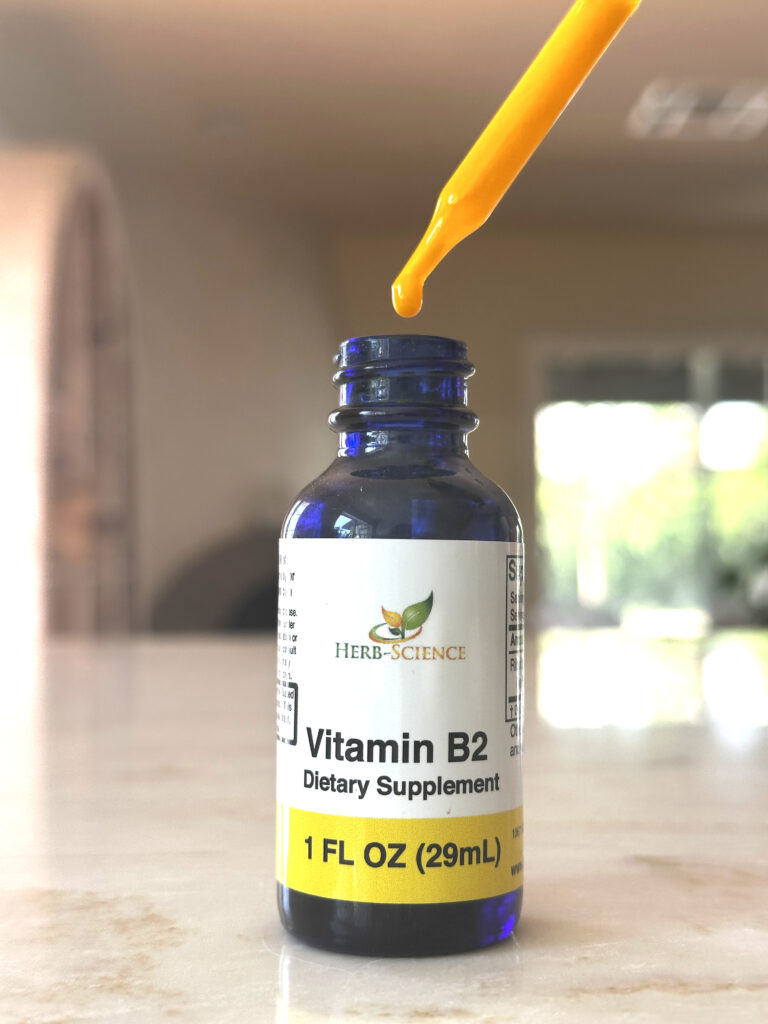
B2 (Riboflavin)
What it does: Involved in cellular energy production and acts as a cofactor in the methylation cycle. Supports eye health, skin, and mitochondrial function.
Signs of deficiency: Cracks at the corners of the mouth (angular cheilitis), sore or inflamed tongue, sensitivity to light, skin issues, migraines.
Populations at higher risk: People on certain medications (some antibiotics, tricyclic antidepressants), athletes, vegans and vegetarians with limited dairy intake.
When to consider a B2 single: People who deal with frequent migraines have shown response to consistent B2 supplementation in some clinical research. Also relevant for anyone with the visible deficiency signs (cracked mouth corners, sore tongue). Look for riboflavin in the non-activated form — not “riboflavin-5-phosphate” for sensitive systems.
B3 (Niacin / Niacinamide)
What it does: Involved in DNA repair, cellular energy production, and supports healthy skin.
Signs of deficiency: Digestive discomfort, skin problems, cognitive fatigue. Full-blown deficiency (pellagra) is rare in modern diets, but low-level insufficiency is more common than people realize.
Populations at higher risk: People with high alcohol intake, restrictive diets, or malabsorption issues.
When to consider a B3 single: People looking for skin support often reach for niacinamide specifically — it has a well-documented topical and internal role in skin health. Look for niacinamide (the non-flushing form) if you want the benefits without the intense flush that comes with high-dose niacin.
B5 (Pantothenic Acid)
What it does: Involved in coenzyme A production, adrenal function, and the metabolism of fats, proteins, and carbohydrates.
Signs of deficiency: True deficiency is very rare because pantothenic acid is present in almost all foods. Low-normal levels can show up as fatigue, headaches, or digestive complaints.
Populations at higher risk: People under sustained chronic stress may burn through B5 faster than normal.
When to consider a B5 single: During periods of extended stress or adrenal recovery. Look for Look for D-calcium pantothenate — the standard, well-tolerated form used in most quality supplements.
B6 (Pyridoxine HCl)
What it does: Involved in neurotransmitter production, protein metabolism, immune function, and hormone regulation.
Signs of deficiency: Mood changes, cognitive fog, nerve symptoms, PMS symptoms in menstruating individuals.
Populations at higher risk: Older adults, people with high alcohol intake, those on certain medications (some blood pressure meds, oral contraceptives).
When to consider a B6 single: Some people take B6 for PMS support (there’s a meaningful research base on this), and B6 is sometimes paired with magnesium for sleep support. Look for pyridoxine HCl — the non-activated form. Very important: B6 has a documented neurotoxicity risk at doses over 100 mg/day with long-term use. Stick to moderate doses. This is one B-vitamin where more is definitely NOT better.
B7 (Biotin)
What it does: Involved in hair, skin, and nail health, plus the metabolism of fats, carbs, and proteins.
Signs of deficiency: Hair thinning or loss, brittle nails, skin issues, mood changes. True deficiency is rare but can occur with certain medications, high consumption of raw egg whites (which contain a biotin-binding protein), or long-term antibiotic use.
Populations at higher risk: People on long-term antibiotics or antiseizure medications.
When to consider a B7 single: People specifically supporting hair, skin, or nail health often reach for biotin. Look for D-Biotin USP — the standard, pharmaceutical-grade form. Important warning: High-dose biotin (5,000 mcg or more) can interfere with common lab tests, including thyroid panels and cardiac troponin tests. The FDA has issued public safety warnings about this. Stick to moderate doses (100-200 mcg) unless you’re working with a practitioner.
B9 (Folate / Folic Acid)
What it does: Involved in DNA synthesis, red blood cell production, and the methylation cycle.
Signs of deficiency: Fatigue, mood changes, mouth sores, low red blood cell counts on lab work.
Populations at higher risk: Pregnant women and those planning pregnancy (folate has a well-established role in preventing neural tube defects), MTHFR carriers, people with alcohol dependence, older adults with reduced absorption.
When to consider a B9 single: Pregnancy planning is the most common reason (always with a doctor’s guidance). Also relevant for anyone with documented low folate on labs. Look for folic acid in moderate doses — despite the marketing you’ve heard, folic acid is safe and effective for most people, including most MTHFR carriers.
B12 (Cyanocobalamin / Hydroxocobalamin)
What it does: Involved in nerve function, red blood cell production, DNA synthesis, and energy metabolism.
Signs of deficiency: Fatigue, tingling or numbness in the hands or feet, memory issues, mood changes, difficulty concentrating.
Populations at higher risk: Vegans and strict vegetarians (B12 is only naturally present in animal foods), older adults (declining stomach acid reduces absorption), people on metformin or PPIs (both deplete B12), those with pernicious anemia or intrinsic factor issues.
When to consider a B12 single: This is the most commonly needed single B-vitamin, especially for people over 40, vegetarians, and anyone on B12-depleting medications. Look for cyanocobalamin or hydroxocobalamin — both are non-methylated forms that let your body activate B12 at its own pace. Standard blood tests can miss functional deficiency, so if you have symptoms and your B12 came back “in range,” it may still be worth pursuing.
How to know what you need
If you’re not sure whether you need a single B or a full B-Complex, ask yourself:
Do you have a specific concern? If yes, look at the deficiency signs above and see if any pattern jumps out. If one does, start with the single B. If not, a B-Complex is the safer starting point.
Have you had recent bloodwork? If a doctor has flagged a specific B-vitamin as low, address that one directly. Don’t shotgun with a B-Complex when a single would do the job.
Are you methyl-sensitive? If you know you’re methyl-sensitive and don’t have a specific deficiency, a well-formulated non-methylated B-Complex is usually the smartest starting point. Once you’ve stabilized on that, you can add a single B-vitamin as targeted support if a specific need emerges.
Are you supporting a specific life stage or situation? Pregnancy, high stress recovery, hair/skin/nail concerns, migraines, PMS — these are all cases where a targeted single B may be more helpful than a broad B-Complex.
Where to start
If you want the full-team approach: Herb-Science Liquid B-Complex → Non-methylated forms of all 8 B-vitamins. Every dose at 500% DV or less. Liquid format for dosing control.
If you want a specific single: browse the individual B-vitamins here → Individual Liquid B-Vitamins Same design principles as the B-Complex — non-methylated forms, moderate doses, clean ingredients, liquid format. Each one built to be tolerated by sensitive systems.
Free reference card
If you want to walk into any supplement conversation — whether you’re evaluating a B-Complex or a single — better prepared, grab the Supplements to Avoid Reference Card. It’s the same guide people who take my methyl-sensitivity quiz get on day one, and it covers the specific ingredient forms to look for and the marketing language that usually signals a product isn’t right for careful long-term daily use.
The bottom line
There’s nothing wrong with a B-Complex — it’s the right call for a lot of people. But it isn’t the right call for everyone. Sometimes a single B-vitamin, taken with intention, works better than eight B-vitamins taken by default.
The more you understand what each one actually does, the more precisely you can support your body. And precision — not volume — is usually what a sensitive system responds to best.
— Eli