
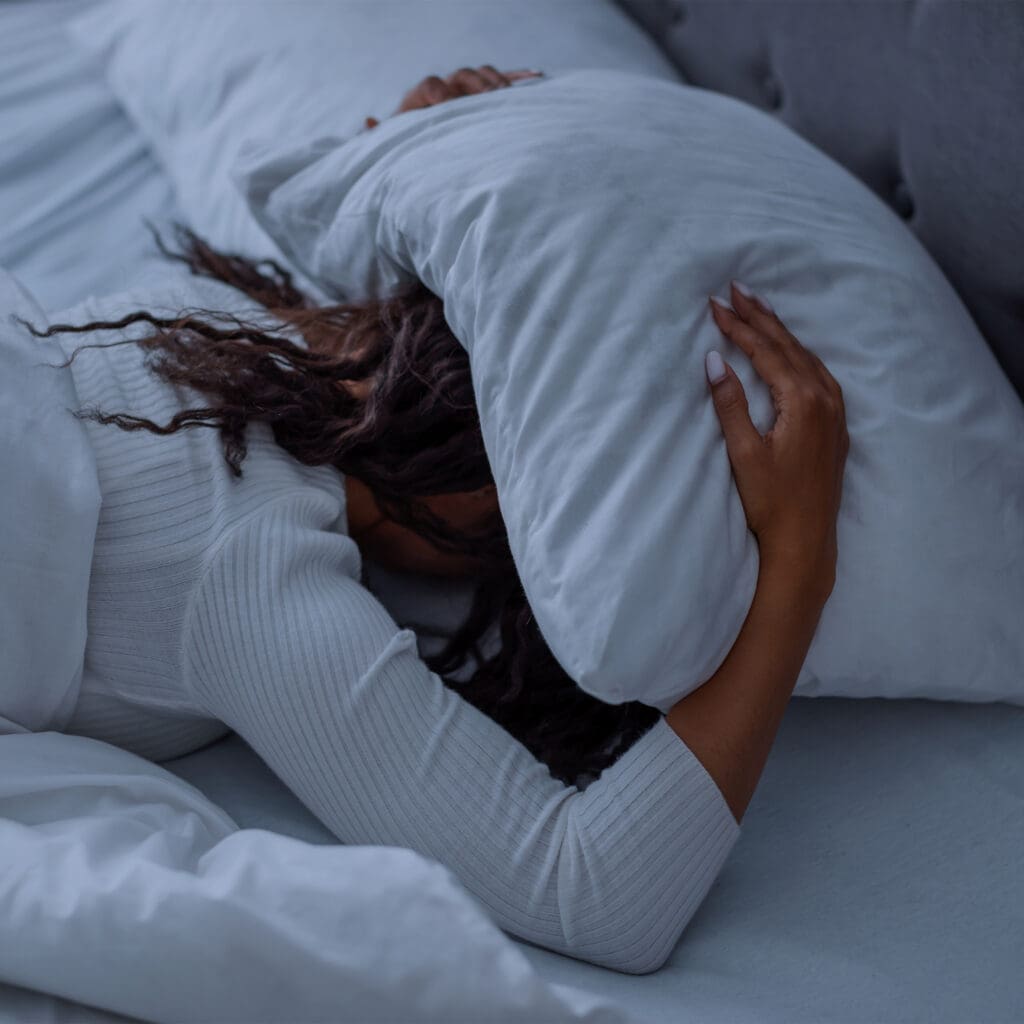
What if there was one pill that could support weight loss, reduce stress and anxiety, boost your immune system, ease aches and pains, improve focus and memory — and about 100 more benefits — without any side effects?
Would you be interested?
That’s what sleep does.
You might be thinking: I sleep every night. Why don’t I feel these benefits? Well, how good is your sleep on a regular basis? The quality of your sleep determines how well all those benefits actually show up.
Research shows adults need 7 to 9 hours of sleep every night. For those of you who say you do fine on 5 or 6 — you’re used to it. You’ve normalized functioning in a deprived state. But your body is paying the price whether you feel it or not.
A good night’s sleep is best when uninterrupted. The most common things that disrupt it:
- Urination
- Too warm
- Digestive upset
- Racing mind
- Overstimulation
- Dehydration
- Nutrient deficiencies
- Your partner
- Alcohol
- Too much caffeine or stimulants
Let’s walk through each.
Urination
One of the most common reasons we wake up at night. Usually caused by drinking too much fluid in the late afternoon or evening — but there’s more going on than most people realize.
During sleep, your kidneys naturally concentrate urine so your bladder fills more slowly. (That’s why your morning urine is darker.) But today’s diet, filled with processed foods and higher toxin loads, means your body is working harder overnight to flush waste. That takes extra fluid, and you wake up needing to go.
Alcohol, caffeine, and sugary foods also increase urine production. What you eat and drink regularly directly affects whether you wake up at 3am to use the bathroom.
Digestion
When you sleep, your digestive system slows down. If you’ve eaten a heavy meal late in the evening — or ate too close to bedtime — your body is still trying to process that food instead of fully resting. The result is gas, bloating, discomfort, and interrupted sleep.
Too Hot
Your core body temperature needs to drop about 1-2°F to fall asleep and stay asleep. A hot room, or being buried under heavy blankets, prevents that drop. Your body ends up fighting to cool itself all night instead of resting.
Rule of thumb: cool room, warm blanket. Not warm room, warm blanket.
Racing Mind
Modern life trains us to never fully shut off. Deadlines, financial pressures, replaying conversations, worrying about tomorrow — the brain stays in problem-solving mode long after you’d like it to stop. Falling asleep with a racing mind is nearly impossible, and even if you do fall asleep, your sleep is often fragmented.
Overstimulation
There are more things stimulating your nervous system today than any time in history. A stressful day. Afternoon coffee. Social media. Bright lights at night. Alerts from your phone. Our nervous systems are chronically pushed into fight-or-flight mode and we’ve forgotten how to regulate down.
Most of us live like we’re sleeping inside a bear’s cave — one eye open, always alert. That’s not how your body is designed to recover.
Dehydration
Here’s the frustrating paradox: drinking too much right before bed wakes you up to pee, but being chronically dehydrated during the day also wrecks your sleep.
When you’re dehydrated, your blood thickens slightly, your heart works harder, and your body pulls water from tissues (including your brain) to compensate. That can cause overnight headaches, muscle cramps, and tossing and turning. Dehydration also triggers cortisol release — the stress hormone that keeps you alert when you should be sleeping.
The fix is to hydrate consistently throughout the day and taper off fluid intake 2-3 hours before bed.
Nutrient Deficiencies
Specific nutrient deficiencies have outsized effects on sleep that most people never connect to their diet.
- Magnesium is required to activate GABA, your body’s main calming neurotransmitter. Low magnesium often shows up as leg cramps, restless legs, and difficulty falling asleep – (raw pumpkin seeds are my favorite – supports prostate for men too).
- B-vitamins (especially B6) are needed to produce serotonin and melatonin — the hormones that regulate your sleep cycle – Low Dose – Non Methylated
- Iron deficiency contributes to restless legs and insomnia – Learn more here
- Vitamin D deficiency correlates with poor sleep quality across multiple studies – 30 minutes of Sunshine and Cod Liver Oil
- Omega-3 fatty acids support sleep architecture and reduce overnight inflammation – Cod Liver Oil
If you’re missing the raw materials your body needs to produce sleep chemistry, no amount of sleep hygiene will fully fix the problem. The nutrients come first.
Your Partner
A partner who snores, moves frequently, runs hot or cold, or keeps a different schedule can disrupt your sleep in ways you don’t consciously notice. Most of us get used to our partner’s patterns and underestimate how much “micro-arousals” (brief wakings you don’t remember) affect sleep quality.
If your partner snores significantly, it’s worth having them checked for sleep apnea. It’s not just about your sleep — untreated sleep apnea has serious long-term health consequences for them.
Alcohol
Alcohol is a sedative, so it can make you fall asleep faster. But it dramatically disrupts the deeper stages of sleep — REM and deep sleep — which is where your body actually recovers.
You’ll often wake up around 3-4am after drinking, feel wired and anxious, and struggle to fall back asleep. Alcohol also dehydrates you, which compounds everything.
Even one or two drinks within three hours of bed measurably reduces sleep quality. If you’re drinking regularly in the evening and wondering why you don’t feel rested, this is a strong candidate.
Too Much Caffeine or Stimulants
Caffeine has a half-life of 5-6 hours. That 3pm cup of coffee is still 50% active in your system at 9pm. Caffeine works by blocking adenosine receptors — the chemistry that builds up during the day to make you feel sleepy — so even if you can fall asleep after an afternoon coffee, the sleep is often shallower and less restorative.
Stimulants from pre-workouts, certain medications, and overstimulating supplements can all have similar effects. Cutting caffeine by early afternoon is one of the fastest ways to improve sleep.
A Note On B-Vitamins and Sleep
If you’ve been taking a B-Complex and noticing that you can’t fall asleep, feel wired at night, or wake up with a racing mind — the problem isn’t that B-vitamins are keeping you up. It’s probably the form and dose of the B-vitamins you’re taking.
For roughly 1 in 3 adults, methylated B-vitamins (methylcobalamin, methylfolate) overload the nervous system. Combined with the mega-doses most brands use (often 10,000% or more of the Daily Value), it’s a common cause of exactly the sleep issues people think are from caffeine, stress, or hormones.
If you’ve reacted this way to a B-Complex, you don’t need to give up B-vitamins. You need the right form. Learn more here.
If you’re not sure whether you’re methyl-sensitive, feeling wired or anxious after a B-Complex is one of the clearest signs.
For Most of Us, Several of These Are Happening at Once
I used to be one of them. If you don’t wake up feeling refreshed and ready to take on the day, there’s a strong chance you’re not getting the rest your body actually needs. And if you’re dealing with any ongoing physical or mental health issue, you’ll be fighting a losing battle until you prioritize sleep.
I spent the last 10 years dialing in my sleep. Here’s the system I use that keeps me sleeping through the night and waking up feeling genuinely rested — 99% of the time.
My 11-Step System for Deep Sleep
Step 1: Wake up at the same time, drink water, get sunlight.
How you wake up affects your entire day — and the following night’s sleep. Waking at a consistent time trains your body to produce wake-up hormones (cortisol) on schedule. Morning sunlight (even 5-10 minutes) sets your 24-hour circadian rhythm, which makes falling asleep that night dramatically easier. Water flushes overnight waste out of your system and rehydrates you after 7-9 hours without fluid.
Step 2: Eat a breakfast high in healthy fats and protein, low in carbs and sugar.
(Whole fruit is okay — no juice.) Protein and fat give your body nutrients without the glucose spike-and-crash cycle that wrecks energy throughout the day. Blood sugar stability during the day helps blood sugar stability at night, which prevents the 3am wake-ups a lot of people experience.
Step 3: Finish your energy-support supplements by early afternoon.
Coffee, green tea, pre-workouts, and even B-vitamins can block adenosine receptors or increase energy production well past bedtime. The rule of thumb: no stimulants after noon, no energizing supplements after 2pm.
Step 4: Exercise for 30 minutes to an hour.
Movement builds adenosine throughout the day — the compound your body uses to make you feel sleepy at night. Exercise also reduces stress, calms the nervous system, and improves deep sleep quality.
Avoid intense physical activity 4-5 hours before bed. Vigorous exercise raises body temperature and cortisol, both of which delay sleep onset.
(Naps are fine, but keep them short — long naps burn off the adenosine you need for nighttime sleep.)
Step 5: Stay hydrated throughout the day.
Steady hydration keeps your body flushing waste efficiently during the day, so less needs to happen at night. Taper fluid intake 2-3 hours before bed to reduce overnight urination.
Step 6: Eat whole foods.
Clean eating isn’t just about getting more nutrients. It’s about avoiding the processed ingredients, additives, and sugar spikes that create inflammation and disrupt sleep quality. A diet of whole foods supports deeper, more restorative sleep almost automatically.
Step 7: Deal with what’s keeping you up at night.
This one’s direct, but it matters: if a conversation needs to be had, have it. If you’re overwhelmed by financial pressure, start seeking a solution. If a situation is weighing on you, address it. Doing nothing about these things only makes them bigger — and they’ll show up as 3am wake-ups until you handle them.
Step 8: Eat dinner 3-4 hours before bed.
Gives your digestive system time to finish its work before you lie down. Prevents gas, acid reflux, and overnight digestive discomfort.
Step 9: Create a nighttime routine.
Whatever calms you down works — but it must include no screens an hour before bed. Screens suppress melatonin, which is the hormone that signals your body it’s time to sleep. I personally have an herbal tea blend that supports sleep and a reading habit — that combination has worked better for me than anything else.
Step 10: Write out any lingering thoughts.
If your brain is racing, get it onto paper. Write out tomorrow’s to-do list, the worry you can’t shake, or the thing you need to remember. Say it plainly — no sugar-coating. Research shows this practice reduces cognitive arousal at bedtime and helps you fall asleep faster.
Step 11: Go to bed at the same time every night.
Just like consistent wake-up times, consistent bedtimes train your body to produce melatonin on schedule. The circadian rhythm is one of the most powerful levers you have — once it’s set, sleep becomes dramatically easier.
The Bottom Line
Most of us aren’t dealing with just one of these issues. We’re dealing with five or six at once, and we’ve normalized the exhaustion that comes with it.
Pick two or three to work on first. Give them two to three weeks of real consistency. Then add two more. You don’t have to transform your sleep overnight — but every piece you fix compounds on the next one, until the result is a body that actually recovers at night.
Sleep is the one habit that touches everything else. Fix it, and almost every other health issue in your life gets easier to address.