If you’ve been researching B12 supplements online, you’ve probably been told that cyanocobalamin is dangerous, synthetic, outdated, or useless — especially if you have the MTHFR gene.
The influencers say it. Some functional medicine practitioners repeat it. The methylated B-vitamin brands build their entire positioning on it. For some people, that advice is right. For a much larger group than the industry acknowledges, it’s incomplete — and that incomplete picture is why so many MTHFR carriers end up feeling worse on products that are supposed to help them.
I know, because I believed those claims when I started Herb-Science. I almost switched my entire product line to methylated formulas based on that pressure. Then I did my own research — and dug into the actual science rather than the marketing — and realized the story has been dramatically oversimplified.
This article is the full breakdown of cyanocobalamin: what it actually is, where the fear comes from, when it works, when it doesn’t, and why for most people — including the majority of MTHFR carriers — it’s the smartest form of B12 you can take.
The Short Answer
Cyanocobalamin is a stable, well-researched form of Vitamin B12 that your body converts into both active forms (methylcobalamin and adenosylcobalamin) at the pace your body can handle. It’s safe, effective, and often better tolerated than methylated forms — especially for people with slow COMT, which is extremely common among MTHFR carriers.
The “cyanide” fear is biologically meaningless. The “synthetic” complaint applies to every B-vitamin on the market, including the methylated ones.
For most people, cyanocobalamin at a moderate dose is the right starting point. For a specific smaller group, methylated forms are better. By the end of this article you’ll know exactly which group you’re in.
The Cyanide Myth
Let’s address the biggest fear first.
“Cyanocobalamin contains cyanide.”
Technically, yes. There’s a cyanide (CN) molecule attached to the cobalamin structure. That’s where the name comes from.
But the amount is biologically trivial.
- One standard dose of cyanocobalamin (1,000 mcg) contains about 20 micrograms of cyanide.
- A single apple contains roughly 150-300 micrograms of cyanide (naturally produced in apple seeds and trace amounts throughout the fruit).
- A single serving of almonds contains more cyanide than a B12 supplement.
- A cup of coffee can expose you to more cyanide-related compounds than cyanocobalamin.
Your body processes trace cyanide the same way it processes other mild toxins — through specific detoxification pathways in your liver. You eat and drink more cyanide every day from your normal diet than you’d ever get from a B12 supplement.
Some of the online concern about cyanocobalamin started as reasonable caution that got passed around and amplified until it became something it was never meant to be. The biology doesn’t support treating it as a real health threat.
Bottom line: The cyanide in cyanocobalamin is not a meaningful health concern. If you can safely eat an apple or drink a cup of coffee, you can safely take cyanocobalamin.
“Isn’t It Synthetic?”
The truth the supplement industry doesn’t advertise:
Every single B12 supplement on the market is synthesized in a lab.
Methylcobalamin? Lab-made.
Hydroxocobalamin? Lab-made.
Adenosylcobalamin? Lab-made.
Cyanocobalamin? Lab-made.
There is no “natural” B12 you can pull off a shelf. B12 is produced in nature by bacteria (and only by bacteria) — animals absorb it from eating foods that contain it, which is why B12 is found almost exclusively in animal products. Even those sources often come from supplementation of the animals’ feed.
Any B12 supplement bottle is a lab-synthesized chemical. The question isn’t “natural vs. synthetic” — because there’s no natural option. The question is: which synthesized form is right for your body?
That’s a completely different question, and we’ll answer it below.
“But My Body Can’t Convert It Because of MTHFR”
This is the big one — the claim that keeps most MTHFR-aware customers from considering cyanocobalamin.
The claim goes: “If you have MTHFR, your body can’t properly convert cyanocobalamin into its active forms. So you need to take pre-methylated forms directly.”
Here’s the actual biology.
What MTHFR affects
The MTHFR gene affects how your body processes folate (vitamin B9), not B12 directly. Specifically, it slows your ability to convert 5,10-methylene-THF into 5-methyl-THF — the active form of folate that donates methyl groups.
The MTHFR variant doesn’t actually prevent cyanocobalamin conversion. It affects a different step in the broader methylation cycle.
How cyanocobalamin actually gets converted
When you take cyanocobalamin, your body does the following:
- Removes the cyanide group (through standard liver detoxification)
- Converts the resulting cobalamin into both active forms (methylcobalamin and adenosylcobalamin) as needed, in the specific cells and tissues where each is needed
- Uses them in the places and amounts your body determines are right
That gradual, body-controlled conversion is actually a benefit, not a flaw. It’s your body’s way of making sure B12 is produced in the right amount, in the right form, at the right time — rather than getting flooded with pre-activated forms all at once.
Can MTHFR carriers do this conversion?
Yes.
MTHFR affects the folate side of the methylation cycle, not the direct B12 conversion. The enzymes that convert cyanocobalamin into active forms are different enzymes than the one MTHFR affects.
You can absolutely methylate cyanocobalamin with MTHFR. You just do it a little more slowly, which is actually fine for most people.
Some MTHFR carriers who also have specific MTR or MTRR variants may genuinely benefit from pre-activated B12. But that’s a smaller subset — not every MTHFR carrier.
The Piece Most People Never Hear: Clearance
Here’s where the real story diverges from the mainstream MTHFR advice.
The MTHFR narrative only tells half the story — the “adding methyl groups” side.
The other half of the methylation cycle is clearance — how fast your body can clear methyl groups once they’ve been used.
Clearance is controlled by a different gene called COMT. A common variant (Val158Met) slows COMT by 3-4x. People with slow COMT clear methyl groups much more slowly than people with fast COMT.
And here’s the key fact: most people with MTHFR also have slow COMT. These two variants frequently appear together.
What this means for methylated B-vitamins
If you have slow COMT and you take pre-methylated B-vitamins, the methyl groups flood into your body faster than your clearance system can process them. The excess methyl groups overstimulate your nervous system.
That’s what causes:
- Anxiety
- Jitters
- Insomnia
- Racing heart
- Wired-but-tired feeling
- Brain fog
- Mood swings
If you’ve had this reaction to methylated B-vitamins, this is why. You’re not too sensitive. You’re not broken. Your clearance system just can’t keep up with the input.
Why cyanocobalamin works for slow-COMT MTHFR carriers
Cyanocobalamin gets converted to active forms gradually, at the pace your body can clear them. No flood. No overload. Just steady, usable B12 in the amount your cells actually need.
For the MTHFR carrier with slow COMT (a very common combination), cyanocobalamin is often the better fit — because the gradual conversion matches the slower clearance. Methylated forms work for a different genetic profile. The mistake the industry makes isn’t selling methylated — it’s recommending methylated to everyone with MTHFR without accounting for the clearance side.
When Methylated Forms Actually Are the Right Choice
I want to be honest here, because the one-size-fits-all advice is exactly the problem.
Methylated forms genuinely work better for a specific subset of people:
- Fast COMT (Val/Val) with slow MTHFR
- Specific MTR or MTRR variants that affect conversion
- Diagnosed severe methylation issues that don’t respond to non-methylated forms
- Clinical direction from a practitioner based on actual testing
If you fit this profile, methylated B12 may genuinely help you. The quiz on our site helps you figure out which category you’re in. There’s no shame in needing methylated — it’s just a smaller group than the industry wants you to believe.
The Dose Question
Here’s the second myth worth addressing: that you need mega-doses of B12 to actually correct a deficiency.
The standard methylated B-complex delivers 1,000-5,000 mcg of B12 per dose — 41,000% to 208,000% of the daily value.
Your body doesn’t need that much. It can’t even use that much.
What the research actually shows
B12 is water-soluble. Your body uses what it needs and excretes the rest through urine. Taking 5,000 mcg instead of 50 mcg doesn’t make you 100x healthier — it just makes your kidneys work harder flushing out what you can’t use.
The research on correcting mild to moderate B12 deficiency consistently shows that moderate daily doses (10-25 mcg) work as well as mega-doses for most people, especially when taken consistently over 2-3 months.
Severe deficiency (confirmed through bloodwork, often requiring injections) is a different case and should be managed with a practitioner. But for the typical “my B12 is in the low-normal range and I feel tired” case, moderate doses do the job.
Why mega-doses can actually hurt
In sensitive people (particularly slow-COMT MTHFR carriers), the mega-doses commonly cause anxiety and insomnia even in non-methylated forms, because the sheer volume of nutrient coming in overwhelms the processing systems.
Our cyanocobalamin is dosed at a moderate 8-16 mcg per serving — enough to meaningfully support healthy B12 levels, not so much it stresses your system.
How to Know If You’re Actually Low on B12
Common signs:
- Persistent fatigue that sleep doesn’t fix
- Tingling or numbness in hands or feet
- Brain fog, memory lapses, or difficulty concentrating
- Anxiety or low mood
- Pale skin
- Shortness of breath on mild exertion
- Balance issues or dizziness
- A smooth, sore, or inflamed tongue
If several of these sound familiar, it’s worth testing. The specific tests to request:
- Serum B12 (standard, but reference ranges are often too low)
- Methylmalonic acid (MMA) — more sensitive marker of functional deficiency
- Homocysteine — elevated levels suggest B12, B6, or folate insufficiency
Standard labs often consider B12 “normal” at 200 pg/mL. Many functional medicine practitioners (and research in countries like Japan) use 500+ pg/mL as the floor. If your bloodwork is “normal” but you still feel the symptoms, functional deficiency is likely — and supplementation often helps.
What to Look for in a Cyanocobalamin Supplement
Four things actually matter:
1. Moderate dose, not mega-dose.
Look for 10-25 mcg per serving. Avoid anything over 100 mcg unless specifically directed by a practitioner.
2. Clean base — minimal fillers.
Liquid B12 in a glycerin and water base is clean, absorbable, and free of unnecessary additives. Capsules with gelatin, dyes, flow agents, or artificial sweeteners should be avoided when possible.
3. Third-party tested.
The supplement industry is largely unregulated. Products that are third-party tested for purity and potency are the only ones you can trust to contain what the label says.
4. From a brand with a specific audience focus.
Mass-market brands make one formula for everyone. Specialty brands build for specific needs. If you’ve reacted badly to standard formulas, a brand built specifically for sensitive systems is almost always the better choice.
Our Cyanocobalamin B12
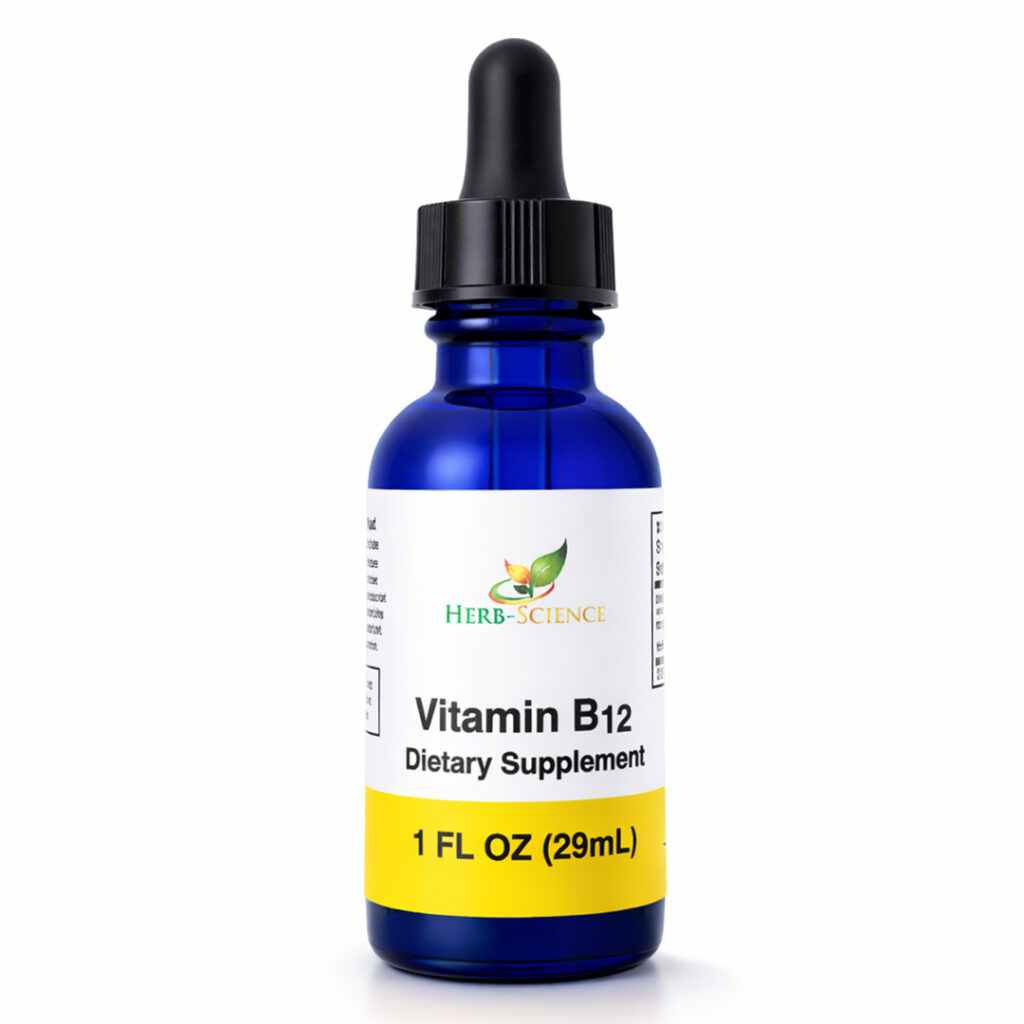
Our Liquid Vitamin B12 (Cyanocobalamin) is built on exactly this philosophy:
- Non-methylated form (cyanocobalamin, so your body converts it at its own pace)
- Moderate dose your body can actually use, without the mega-dose overload
- Liquid drops so you can easily adjust the dose to your body — start small, work up gradually if needed
- Clean base of just glycerin and water — no fillers, dyes, or sweeteners
- Third-party tested every batch for purity and potency
- Family-owned and small-batch manufactured, built specifically for people the mainstream industry has left behind
If you’ve been afraid of cyanocobalamin because of the fear-mongering online — or you’ve been told you need methylated forms because of MTHFR — this is the formula for you.
The Bottom Line
Cyanocobalamin is not toxic. It’s not inferior. It’s not useless for MTHFR carriers.
It’s a well-researched, stable, moderately-dosed form of B12 that your body converts into both active forms at the pace your body can handle. For most people — including the majority of MTHFR carriers who also have slow COMT — it’s the better choice than mega-dose methylated formulas.
The fear-mongering around cyanocobalamin has made a lot of methylated-formula brands wealthy. It hasn’t made the people taking those formulas healthier.
If you’ve been on the fence about trying cyanocobalamin because of what you’ve read online, know that the fear is largely marketing. The science says cyanocobalamin works, and for people with slow clearance — most MTHFR carriers — it works better than the alternatives.
Try Our Liquid Cyanocobalamin B12 →
REFERENCES
On MTHFR variants and enzyme activity reduction
- Frosst P, Blom HJ, Milos R, et al. “A candidate genetic risk factor for vascular disease: a common mutation in methylenetetrahydrofolate reductase.” Nature Genetics. 1995;10(1):111-113.
- This is the foundational C677T paper. Documents the ~70% activity reduction in homozygotes.
- PubMed ID: 7647779
- Weisberg I, Tran P, Christensen B, et al. “A second genetic polymorphism in methylenetetrahydrofolate reductase (MTHFR) associated with decreased enzyme activity.” Molecular Genetics and Metabolism.1998;64(3):169-172.
- A1298C variant characterization.
- PubMed ID: 9719624
- NIH Office of Dietary Supplements: Folate Fact Sheet for Health Professionals
- https://ods.od.nih.gov/factsheets/Folate-HealthProfessional/
- Reliable summary of MTHFR genetics and folate metabolism
On COMT Val158Met variant and clearance
- Chen J, Lipska BK, Halim N, et al. “Functional analysis of genetic variation in catechol-O-methyltransferase (COMT): effects on mRNA, protein, and enzyme activity in postmortem human brain.” American Journal of Human Genetics. 2004;75(5):807-821.
- Documents the 3-4x activity difference between Val/Val and Met/Met variants.
- PubMed ID: 15457404
- Lachman HM, Papolos DF, Saito T, et al. “Human catechol-O-methyltransferase pharmacogenetics: description of a functional polymorphism and its potential application to neuropsychiatric disorders.” Pharmacogenetics.1996;6(3):243-250.
- Classic COMT variant characterization.
- PubMed ID: 8807664
On cyanocobalamin conversion to active forms
- Paul C, Brady DM. “Comparative Bioavailability and Utilization of Particular Forms of B12 Supplements With Potential to Mitigate B12-related Genetic Polymorphisms.” Integrative Medicine (Encinitas). 2017;16(1):42-49.
- Compares cyanocobalamin, methylcobalamin, and hydroxocobalamin absorption and conversion.
- PubMed ID: 28223907
- Free full text available on PubMed Central
- Thakkar K, Billa G. “Treatment of vitamin B12 deficiency – methylcobalamine? Cyancobalamine? Hydroxocobalamin?—clearing the confusion.” European Journal of Clinical Nutrition. 2015;69(1):1-2.
- Addresses the clinical debate between forms.
- PubMed ID: 25117994
On B12 dosing (that moderate doses work for mild deficiency)
- Eussen SJPM, de Groot LCPGM, Clarke R, et al. “Oral cyanocobalamin supplementation in older people with vitamin B12 deficiency: a dose-finding trial.” Archives of Internal Medicine. 2005;165(10):1167-1172.
- Found that moderate daily doses effectively corrected deficiency in elderly patients.
- PubMed ID: 15911731
- Butler CC, Vidal-Alaball J, Cannings-John R, et al. “Oral vitamin B12 versus intramuscular vitamin B12 for vitamin B12 deficiency: a systematic review of randomized controlled trials.” Family Practice. 2006;23(3):279-285.
- Demonstrates oral B12 is as effective as injections for most deficiencies.
- PubMed ID: 16585128
On B12 reference ranges being set too low
- Oh R, Brown DL. “Vitamin B12 deficiency.” American Family Physician. 2003;67(5):979-986.
- Discusses limitations of standard serum B12 testing.
- Free online: https://www.aafp.org/pubs/afp/issues/2003/0301/p979.html
- Mitsuyama Y, Kogoh H. “Serum and cerebrospinal fluid vitamin B12 levels in demented patients with CH3-B12 treatment: preliminary study.” Japanese Journal of Psychiatry and Neurology. 1988;42(1):65-71.
- Research supporting higher cutoff ranges used in Japan.
- Note: this is one of several studies you can cite for the Japan reference range claim. The 500 pg/mL cutoff is well-documented in Japanese clinical practice.
On B12 and the myelin sheath/nerve function
- Hemmer B, Glocker FX, Schumacher M, Deuschl G, Lücking CH. “Subacute combined degeneration: clinical, electrophysiological, and magnetic resonance imaging findings.” Journal of Neurology, Neurosurgery & Psychiatry.1998;65(6):822-827.
- Documents nerve damage from B12 deficiency and the myelin connection.
- PubMed ID: 9854955
On the cyanide concern in cyanocobalamin (addressing the fear)
- Thakkar K, Billa G. (same reference as above) — directly addresses the cyanide safety concern.
- Freeman AG. “Cyanocobalamin—a case for withdrawal: discussion paper.” Journal of the Royal Society of Medicine. 1992;85(11):686-687.
- Historical reference where the cyanide concern was raised. Worth citing to show the concern was discussed and has been largely refuted since.
- PubMed ID: 1474547
On natural food cyanide content (apples, almonds, etc.)
- Jaszczak-Wilke E, Polkowska Ż, Koprowski M, et al. “Amygdalin: Toxicity, Anticancer Activity and Analytical Procedures for Its Determination in Plant Seeds.” Molecules. 2021;26(8):2253.
- Documents cyanogenic glycosides in common foods.
- PubMed ID: 33919733
On the glymphatic system / brain cleaning during sleep (mentioned in your sleep blog, but relevant background)
- Xie L, Kang H, Xu Q, et al. “Sleep drives metabolite clearance from the adult brain.” Science.2013;342(6156):373-377.
- The foundational glymphatic system research.
- PubMed ID: 24136970