

A few months ago, a woman called me about her B12. She told me that when she started taking the methylated version, she felt angry. Not anxious — angry. She’d never felt that way before.
I had a moment of recognition when she said that. I’d been hearing more and more stories like hers, and I was honestly on the verge of switching my own product line over to methylated B-vitamins because everyone in the supplement world had started saying that was the better way. After we got off the phone, I decided to try methylated B-vitamins myself.
I felt anxious for hours.
That experience, combined with her story, changed the direction I was about to take with Herb-Science. And it sent me back to the actual research instead of the marketing.
If you’ve ever taken a “premium” B-complex and felt worse instead of better — more anxious, more jittery, harder to sleep — what I learned might explain why. And there’s a simple fix that almost nobody in the supplement industry is talking about.
What Methylation Actually Is
Methylation is a chemical process your body does roughly a billion times every second. It’s how your body activates vitamins, manages neurotransmitters, repairs DNA, and regulates mood. It runs in the background, all day, every day, whether you think about it or not.
Most B-vitamins in food come in what I’d call “pre-methylation” forms. Your body has to convert them into their active forms before it can actually use them. For most people, this conversion happens just fine.
But here’s where it gets interesting: about 40 to 60 percent of the population has a genetic variant called MTHFR that slows down that conversion. The supplement industry’s answer to that was to pre-convert the vitamins for you and sell “methylated” forms — methylfolate, methylcobalamin, P-5-P. For people whose conversion is slow, these can be genuinely helpful.
What the supplement industry doesn’t talk about is the other side of the spectrum.
Why Some People React Badly to Methylated B-Vitamins
About 1 in 3 people have the opposite problem. Their methylation isn’t slow — it’s already running at maximum. They have variants like COMT slow or MAOA slow, or they’re just generally what people call “highly sensitive.”
For someone in that group, a methylated B-vitamin doesn’t help. It floods an already-busy system with more methyl donors than it can handle. The result is what most people describe as feeling “wired” — anxiety, racing thoughts, jittery, can’t sit still, can’t sleep. Some people get heart palpitations. Some, like the woman who called me, feel angry instead of anxious.
These reactions usually show up within 30 minutes to a few hours of taking the supplement. They can last most of the day. And the kicker is, most people who experience them never connect the dots back to the B-complex. They blame stress, hormones, caffeine, whatever else is in their life. They might switch to a different B-complex brand and have the same problem, because the issue isn’t the brand — it’s the methylated forms.
The Symptoms Most People Don’t Connect Back to Their B-Complex
If you’ve experienced any of these after taking a B-complex, you might be in the methyl-sensitive group:
- Feeling more anxious instead of more energized
- Racing thoughts or feeling “wired”
- Trouble falling asleep or staying asleep
- Irritability that doesn’t match the situation
- Heart palpitations or a feeling that your heart is racing
- Headaches within a few hours of taking it
- Feeling overstimulated, like you’ve had too much caffeine
Some people get one or two of these. Some get the whole list. The most common pattern is taking a supplement in the morning and feeling “off” all day without being able to point to why.
I’ve talked to people who have spent years trying to figure this out — switching brands, lowering doses, taking it at night instead of morning, splitting capsules. Most never realize the issue is the form, not the timing or the dose.
Why I Didn’t Switch to Methylated B-Vitamins
When methylated B-vitamins became the trend in the supplement world over the last few years, I genuinely considered switching my product line. Big names in wellness were saying methylated forms were superior. Some were even claiming non-methylated forms were dangerous. The pressure to keep up was real.
But after the phone call I mentioned, and after trying methylated B-vitamins myself and feeling the anxiety firsthand, I stepped back and read the actual research instead of the marketing.
Here’s what I found:
Both forms have a place. Some people methylate slowly and benefit from pre-converted forms. Some people methylate just fine and do better with the standard non-methylated forms. The “methylated is always better” claim is marketing, not science. The “non-methylated is dangerous” claim is even further off — it’s mostly invented for the purpose of selling the methylated version.
So I decided not to chase the trend. Herb-Science makes non-methylated B-vitamins because that’s what I grew up on, that’s what my father (an herbalist) always took, and that’s what works for the 1 in 3 people the methylated push leaves behind.
The Folic Acid Question
If you’ve spent any time in the wellness space, you’ve probably seen the claim that folic acid is dangerous and you should only take methylfolate. I want to address that briefly because it comes up a lot.
The argument usually goes something like: folic acid is synthetic, it builds up in the bloodstream as “unmetabolized folic acid,” and it’s somehow related to crop spraying or pesticides. That’s not accurate.
Folic acid is the standard non-methylated form of folate. It’s been used safely in supplementation and food fortification for decades. In fact, countries that fortify their food supply with folic acid have seen dramatic decreases in neural tube defects — the data on that is overwhelming. The CDC and WHO both consider folic acid fortification one of the most successful public health interventions of the last 30 years.
That doesn’t mean folic acid is the right choice for everyone. People with severe MTHFR variants may genuinely do better on methylfolate. But for the methyl-sensitive crowd, methylfolate is often the worst supplement they can take — and folic acid is what their body can actually use without overstimulation.
What to Take Instead
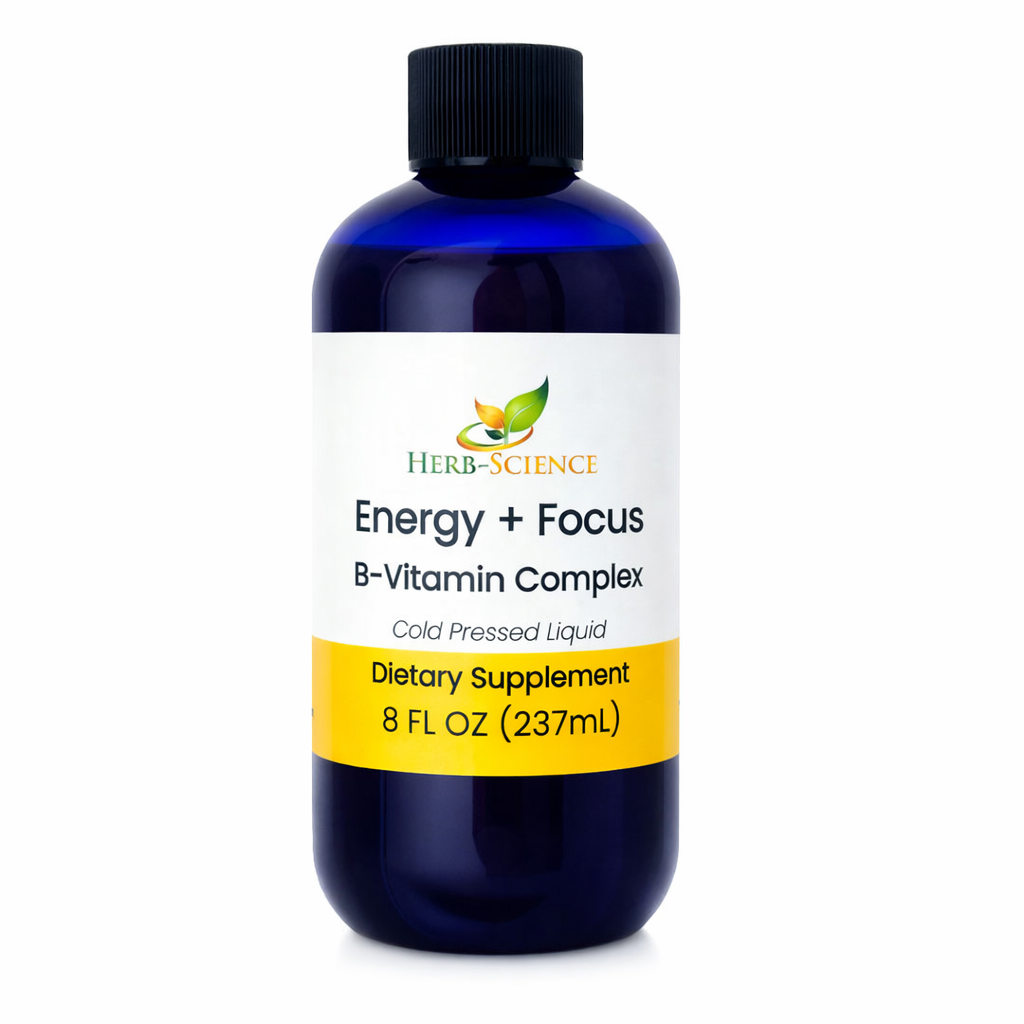
If you suspect you’re in the methyl-sensitive group, here’s what to look for on a supplement label:
Non-methylated forms to look for:
- Folate as folic acid (not methylfolate, L-methylfolate, or 5-MTHF)
- B12 as cyanocobalamin or hydroxocobalamin (not methylcobalamin)
- B6 as pyridoxine HCl (not P-5-P or pyridoxal-5-phosphate)
- B3 as niacinamide (the non-flushing form)
Things to avoid if you’re methyl-sensitive:
- Methylated B-vitamins in any form (above)
- Mega-doses — anything over about 500% of the daily value for any B-vitamin. More isn’t better; for sensitive systems, more is worse.
- Capsules with a long ingredient list of “other ingredients” — common fillers like magnesium stearate and cellulose can also be triggers for sensitive folks
In my own line at Herb-Science, every B-vitamin is non-methylated, every dose is kept at 500% DV or lower, and they’re all delivered as liquids so you can adjust your dose drop by drop instead of being stuck with whatever’s in the capsule.
That’s exactly what we created at Herb-Science – Check it out here
Do You Have The MTHFR Gene?
If you have the MTHFR gene, you’ve likely been told you need methylated forms of your B-vitamins. But that advice doesn’t hold up for everyone with the gene.
If you feel fine on methylated B-vitamins, you’re good to keep going. But if you feel anxiety, jitters, nervousness, trouble sleeping, or anger after taking them — methylated forms aren’t the right fit for your body.
I break down exactly why this happens, and what to do about it, in this article.