

The fine print of supplement labeling — and why it matters for anyone paying attention.
You’re standing in the supplement aisle. You pick up a bottle. The label says “Organic” in big letters across the front. The ingredient list mentions “natural flavors.” You feel good about your choice. Clean. Wholesome. Trustworthy.
Here’s the uncomfortable truth: neither of those labels means what most people assume.
“Natural flavors” isn’t a whole-food ingredient — it’s a highly processed compound that can legally contain up to 100 hidden additives without disclosure. And “organic” on a supplement label often means only a percentage of the ingredients are actually organic, not the whole product.
This isn’t a conspiracy. It’s how the labeling rules were written. Once you understand how they work, it’s hard to look at a supplement label the same way again.
A Quick History: Why “Natural Flavors” Even Exists
Before we get into what “natural flavors” actually are, it’s worth understanding why the term became so widespread in the first place.
For decades, artificial flavors, colors, and sweeteners dominated processed foods and beverages. These synthetic additives were cheap, shelf-stable, and gave manufacturers precise control over how their products tasted and looked.
The problem: many of them have been linked to real health issues.
- Artificial food dyes (Red 40, Yellow 5, Blue 1, and others) have been documented in multiple studies to trigger hyperactivity and attention problems in children. Several European countries now require warning labels on foods containing these dyes.
- Artificial preservatives like BHA and BHT have raised concerns about long-term inflammation. BHA is classified by the International Agency for Research on Cancer as “possibly carcinogenic to humans.”
- Artificial sweeteners like aspartame have been associated with headaches, mood changes, and gut microbiome disruption in various studies.
- Many people experience allergic reactions or intolerances to specific artificial additives — showing up as digestive issues, skin reactions, mood changes, or worse.
As information about these effects spread — particularly after parents started connecting their kids’ behavior issues with dyed and artificially flavored foods — public backlash grew. Consumers started reading labels more carefully. Sales of the most affected brands began to decline.
The food and supplement industries needed a solution. Their answer? Switch to “natural flavors.”
The label sounded healthier. The chemistry, as you’re about to see, often isn’t much different.
What “Natural Flavors” Actually Are
Under FDA regulations, “natural flavor” is defined as any extract, oil, essence, distillate, or fermentation product derived from a natural source — spices, fruits, vegetables, herbs, plants, meat, seafood, dairy, and so on.
So legally, “natural flavors” must start with something natural. They can’t be 100% synthesized from scratch. That part is true.
But here’s what the definition doesn’t tell you:
1. Natural doesn’t mean “from the food it tastes like.”
A “natural strawberry flavor” doesn’t have to come from strawberries. It just has to be chemically identical to a compound found in strawberries — and that compound can be extracted from any natural source.
Real-world examples:
- Natural vanilla flavor is often derived from clove, rice bran, or ferulic acid, not vanilla beans
- Natural coconut flavor is sometimes produced by fermenting sugar-consuming yeast
- Natural raspberry flavor has historically been produced from castoreum, a secretion from beaver glands (this is rare now but still legal)
- Natural apple flavor can come from bacterial fermentation of corn
All of these are legally “natural flavors.” None of them are what the average consumer would guess from the name.
2. Up to 100 additional ingredients can be hidden inside a “natural flavor.”
This is the most under-discussed part of the natural flavor loophole. The FDA allows manufacturers to add solvents, preservatives, emulsifiers, and processing aids to any “natural flavor” without disclosing them individually on the label. As long as those additives serve a flavor-related function, they can hide behind those two words.
So “natural flavor” on a label might actually contain:
- One naturally-derived flavor compound
- Propylene glycol (a common solvent)
- BHA or BHT (preservatives)
- Polysorbate 80 (an emulsifier)
- Silicon dioxide, potassium sorbate, or other processing aids
All of them undisclosed. All of them technically legal.
3. It’s a heavily processed chemical isolate.
Even when a “natural flavor” starts from an actual food source, it’s isolated as a single chemical compound through extraction, distillation, or fermentation. What ends up in your supplement isn’t the whole food — it’s a refined chemical extract that happens to have originated from something natural.
4. Chemically, it’s often identical to “artificial flavors.”
The molecule you get from a “natural” source is often the exact same molecule you’d get from a synthetic manufacturing process. The FDA distinguishes them by source and processing method, not by what they actually are chemically. Most food scientists will tell you there’s essentially no functional difference between well-made natural and artificial flavors.
Want a B-Complex Without the Unnecessary Ingredients?
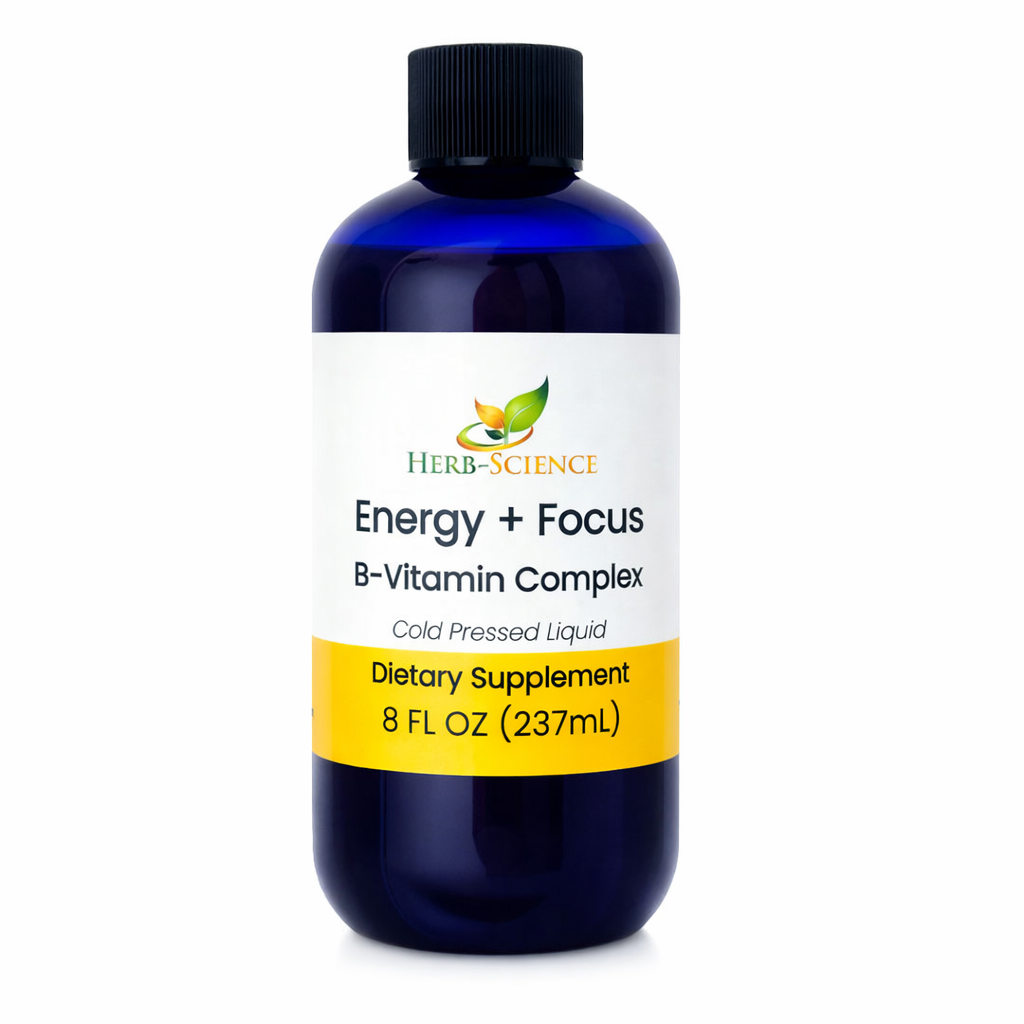
Herb-Science Liquid B-Complex contains no natural flavors, no artificial flavors, no artificial colors, no unnecessary preservatives. Just the 8 B-vitamins in non-methylated forms at moderate doses, in a base of vegetable glycerin and purified water. Nothing hidden. Nothing you can’t pronounce.
See the Herb-Science Liquid B-Complex →
Free shipping · 120-day money-back guarantee
The Organic Labeling Loophole
Now let’s talk about the word “organic” on supplement labels — because it’s more flexible than most people realize.
The USDA’s National Organic Program allows four different levels of organic labeling, and only ONE of them means the whole product is organic:
“100% Organic” — All ingredients must be certified organic (except water and salt). This is the strictest category. Very few products qualify.
“Organic” — At least 95% of the ingredients must be certified organic. The remaining 5% can include non-organic ingredients from an approved list, which allows for things like natural flavors, certain preservatives, and processing aids.
“Made with Organic [ingredient]” — At least 70% of the ingredients must be certified organic. Up to 30% can be non-organic — including synthetic vitamins, natural flavors with all their hidden additives, and other processed ingredients. Products in this category can display “Made with Organic ___” on the front label, mentioning up to three specific organic ingredients.
Less than 70% organic — Cannot use the term “organic” on the front label or the USDA organic seal. Can only mention specific organic ingredients in the ingredient list itself.
So when you see “Organic” or “Made with Organic ___” on a supplement label:
- Up to 5% could be non-organic if it’s certified “Organic”
- Up to 30% could be non-organic if it says “Made with Organic ___”
That non-organic portion can include synthetic vitamin forms, natural flavors with hidden additives, preservatives, colorings, and processing aids you’d never guess were in there.
I learned this from an FDA representative at a supplement industry forum. The exact percentages are set by USDA (which oversees the organic labeling program), but the practical result is the same: an “organic” supplement isn’t necessarily 100% organic, and the parts that aren’t organic can include exactly the ingredients you were trying to avoid.
Why This Matters for Sensitive People
If you’re reading labels carefully, it’s usually because your body has told you it needs to. Maybe you’ve reacted to fillers before. Maybe methylated B-vitamins or mega-doses overstimulated your system. Maybe you have a diagnosed sensitivity, or maybe you just know your body doesn’t tolerate what most people tolerate.
For sensitive folks, “natural flavors” and loose “organic” labeling create real problems:
You can’t know what you’re actually consuming. The whole point of reading labels is to make informed choices. When two words can hide 100 undisclosed additives, and a certification can allow 5-30% non-organic ingredients, the label stops giving you the information you need to make a real decision.
The reassurance is false. A product labeled “Organic” with “Natural Flavors” LOOKS like the clean choice. It carries the visual language of trustworthiness. But the reality can include synthetic vitamins, hidden solvents, and processing aids that trigger the very reactions you were trying to avoid.
Sensitive systems react to what’s not disclosed. People with histamine intolerance, MCAS, MTHFR variants, methyl sensitivity, or general chemical sensitivity often find their symptoms track to specific undisclosed ingredients hidden inside “natural flavors” or the non-organic portion of an “organic” product. Without disclosure, you can’t diagnose what your body is reacting to.
What to Look For on Any Supplement Label
If you want to actually know what’s in a product, here’s what to look for:
Short “Other Ingredients” list. The shorter, the better. A supplement with one or two “other ingredients” you can pronounce and recognize is generally safer than one with a paragraph of chemistry.
Specific named ingredients rather than “natural flavor.” If a product uses vanilla extract, name it. If it uses peppermint oil, name it. Specific ingredients are transparent. “Natural flavors” is not.
No unnecessary flavoring at all. Some products don’t need flavoring — they’re either unflavored or naturally palatable from their base ingredients. This is often the cleanest option.
Recognizable vitamin forms. For B-vitamins specifically, look for named forms like folic acid, cyanocobalamin, pyridoxine HCl, thiamine mononitrate. If you see “proprietary blend” or vague terminology, that’s a flag.
Certification claims that make sense. If a product claims “Organic,” check whether it’s “100% Organic” (all organic) or “Organic” (95%) or “Made with Organic” (70%). All three are legal, but they mean very different things. A 100% Organic certification is meaningful. “Made with Organic ___” is much weaker.
Ingredient transparency over marketing. A brand willing to name every ingredient in plain language is a brand that’s not hiding anything. A brand relying on “natural,” “clean,” “pure,” or “organic” as its primary selling point without specific ingredient transparency may be relying on the label rather than the substance.
How Herb-Science Handles This
At Herb-Science, we don’t use natural flavors in any of our products. Every ingredient we use is listed by its specific name on the label — no hidden flavor cocktails, no undisclosed additives. Learn more here
The Bottom Line
The words “natural flavors” and “organic” have been so widely used in food and supplement marketing that most people assume they mean what they sound like. They don’t, at least not always.
- “Natural flavors” can hide up to 100 undisclosed ingredients
- “Organic” can allow 5-30% non-organic ingredients depending on the label category
- Both terms are legally allowed but frequently misleading in practice
The most reliable way to know what’s in a supplement isn’t to trust the marketing on the front of the bottle. It’s to read the full ingredient list on the back, look for specific named ingredients, and be skeptical of anything that hides behind vague language.
If a brand isn’t willing to tell you exactly what’s in their product, you have to assume there’s a reason.
If you want more on the specific ways supplement marketing misleads people — especially in the methylation and B-vitamin space — I wrote a related piece on the 5 Common Methylation Myths (And What the Science Actually Says) that covers a lot of the industry sleight-of-hand.
Read your labels. Trust ingredients over claims. Your body will thank you.
Supporting Your Body’s Detox Pathways
Even if you’re careful about what you buy, some of these hidden additives will still find their way into your system — through restaurant meals, social gatherings, or products you didn’t have time to fully vet. That’s the reality of the modern food environment.
That’s why keeping your body’s natural elimination pathways clear matters. Your intestines are one of the primary routes your body uses to move out what doesn’t belong. When digestion slows down, waste sits longer, and that waste has more opportunity to affect the rest of your system.
Herb-Science Rest & Digest is a gentle herbal formulation designed to support healthy intestinal function and the natural rhythm your body is meant to have. Not a harsh laxative — just herbs that work with your body, not against it.
We’re currently low on Rest & Digest — about 50 bottles remaining before the next batch is ready.